Volkswagen Golf at high mileage: the durability record
Published · Last updated
The Golf ages in two different registers depending on generation. The current Mk8 (2020 on) records a weak owner-survey score — 82.2%, 28th of 30 in the What Car? family-car class — but its faults are concentrated in software: infotainment freezes, SOS-function errors and warning messages after updates, not broken mechanicals. The Mk7 before it (2013–2020) scores 91.8%, and its ageing questions are the traditional ones — early dry-clutch DSG behaviour and premature timing-chain wear on early petrol engines. The EA211 petrol family that powers most fleet Golfs is a known, durable quantity, which is much of why fleets keep buying the car.
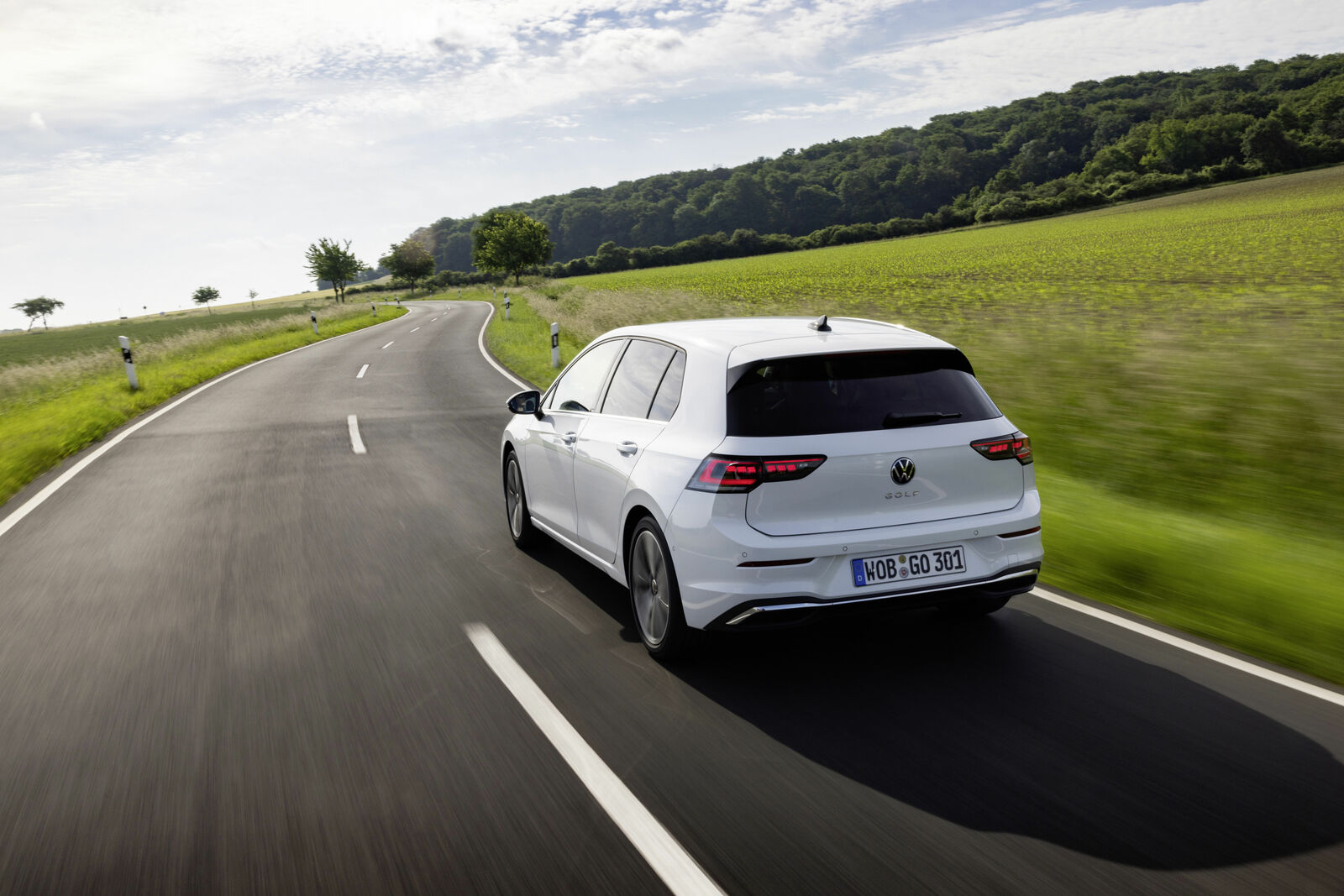 Volkswagen GolfDurability record · exact model shown
The record at a glance
| Generations in hire supply | Mk8 (2020 on) leads current supply — reviewed in our Golf credit hire review; the Mk7 (2013–2020) record frames how the model ages |
|---|---|
| Owner-survey standing | Mk8: 82.2%, 28th of 30 family cars · Mk7: 91.8%, 13th of 25 (What Car? Reliability Survey) |
| Documented weak points | Mk8: launch-era infotainment and software · Mk7: early DSG behaviour, timing-chain wear on early petrols |
| Recall record | Four DVSA-listed Mk8 campaigns; largest covers 26,721 cars (brake servo heat shield) |
| Most-reported faults | Infotainment, electrical sensors and warning lights; gearbox glitches and AdBlue faults on diesels (What Car?) |
How the Golf ages under hire duty
The Golf's engineering fundamentals are the reason it is the default medium-hatch hire car: the EA211 petrol engines and the 2.0 TDI are among the most numerous powertrains on European roads, and the What Car? record on the Mk7 notes fewer reports of major faults than most rivals of its era. What changed with the Mk8 is where the faults live. Owners report screens that respond slowly or fail outright, SOS-function malfunctions that can mean costly replacements, and warning messages appearing after mandatory software updates — a fault profile that drags the survey score down without often stopping the car (What Car? Mk8 reliability guidance). Successive software updates have chipped away at the launch-era problems, and the low-speed hesitation reported on early 1.5 TSI cars was likewise addressed through software revisions, as widely reported by the UK motoring press between 2020 and 2022.
Faults by mileage band
Bands follow the Fleet Duty Rating structure. Every entry below is drawn from the attributed public record.
| Mileage band | What the public record shows |
|---|---|
| 0–30,000 miles | The Mk8's software era: infotainment slow, unresponsive or failed; SOS-function malfunctions; warning messages following software updates (What Car? Mk8 guidance). Recall work lands early: brake servo heat-shield inspection covering 26,721 cars, e-call software on 4,630, plus two small campaigns for crash sensors and brake-pedal fixings. |
| 30,000–60,000 miles | Diesel cars add gearbox glitches and AdBlue-system faults to the reported mix (What Car?). Electrical warning lights and sensor failures are the recurring petrol-car category. Early-build 1.5 TSI low-speed hesitation belongs here too, resolved by dealer software revisions (UK motoring press, 2020–2022). |
| 60,000–100,000 miles | The Mk7 record defines this band: early dry-clutch DSG autos with a documented history of temperamental shifting, premature timing-chain wear on early petrol engines, sat-nav and warning-light faults, and adaptive cruise control that can brake unwanted (What Car? 2013–2020 guidance). Ordinary ageing applies across the class: lamps, suspension and brakes head the DVSA's initial MOT failure categories for all cars. |
| 100,000+ miles | Six-figure Golfs are typically 2.0 TDIs on motorway duty — the cheapest miles the model does and the duty cycle its fleet reputation is built on. The Mk7 owner record at age is defined by service history rather than any systemic fault, with What Car? noting fewer reports of major faults than the class norm. |
Mk7 vs Mk8: the generation split
Read the two generations as different reliability propositions. The Mk7 is mechanically mature: its documented risks are specific and checkable — DSG shift quality on early autos, chain wear on early petrols — and beyond them the survey record is mid-table solid at 91.8%. The Mk8 inverts that: mechanically it carries over known-quantity engines, but its electronic architecture generated the fault reports that sank it to 28th of 30 in class. For a hire car the distinction matters in kind, not just degree — the Mk8 faults a driver meets are screens and warnings; the Mk7 faults that matter are transmission and engine items the operating fleet screens for.
What this means for the car you are handed
A hire Golf is a fleet-maintained vehicle with its recall work and servicing managed by the supplying operator, and fleet cars skew young — which puts them squarely in the software era of the Mk8 record. Practically, that means the most likely fault a hirer meets is an infotainment freeze or a spurious warning message, resolved with an update rather than a workshop stay. The model as a hire proposition is assessed in the Golf review, with class context in medium hatchback — what you will get.
Sources
- What Car? — Used Volkswagen Golf (2020–present) reliability & common problems: survey score, fault categories and recall listing (whatcar.com).
- What Car? — Used Volkswagen Golf (2013–2020) reliability & common problems: DSG, timing-chain and electrical guidance (whatcar.com).
- UK motoring press reporting on Mk8 infotainment issues and 1.5 TSI hesitation software fixes (multiple outlets, 2020–2022).
- DVSA vehicle recall database — Golf Mk7/Mk8 entries (check-vehicle-recalls.service.gov.uk).
- DVSA — MOT testing data for Great Britain: initial failure rates by defect category (gov.uk).
Next: Golf credit hire review · medium hatchback — what you will get · all durability records